











Could 'Paper or plastic?' be a thing of the past?
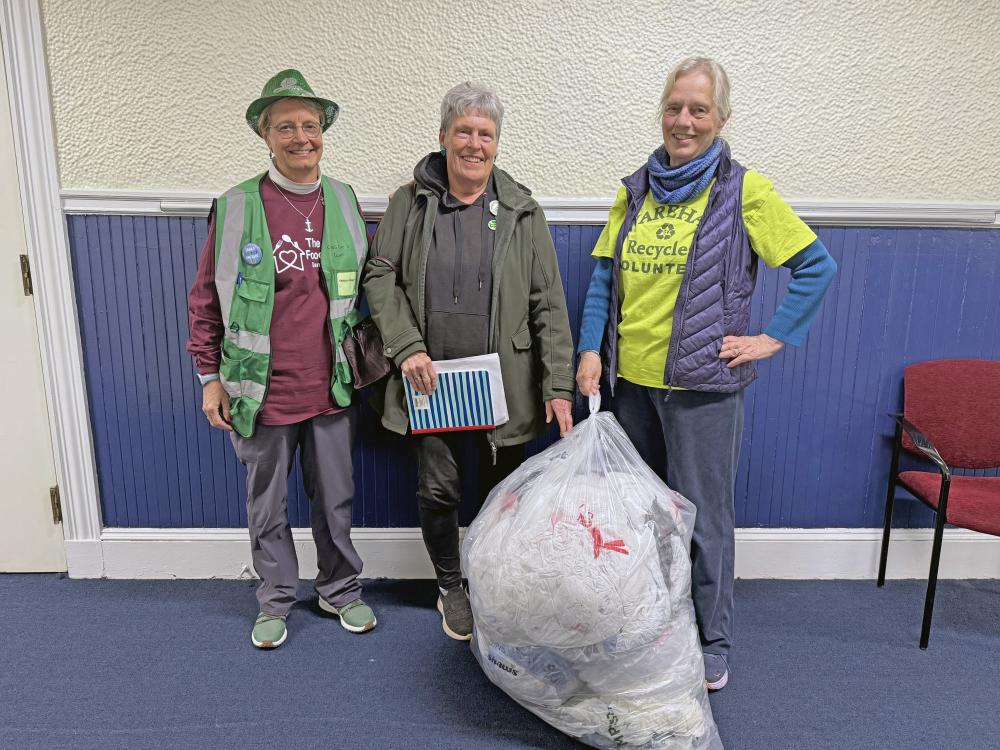 Hilary Greene, Jo-Ann Finn and Amanda Cobb with the collected bag of plastics. Photos by Kat Sheridan
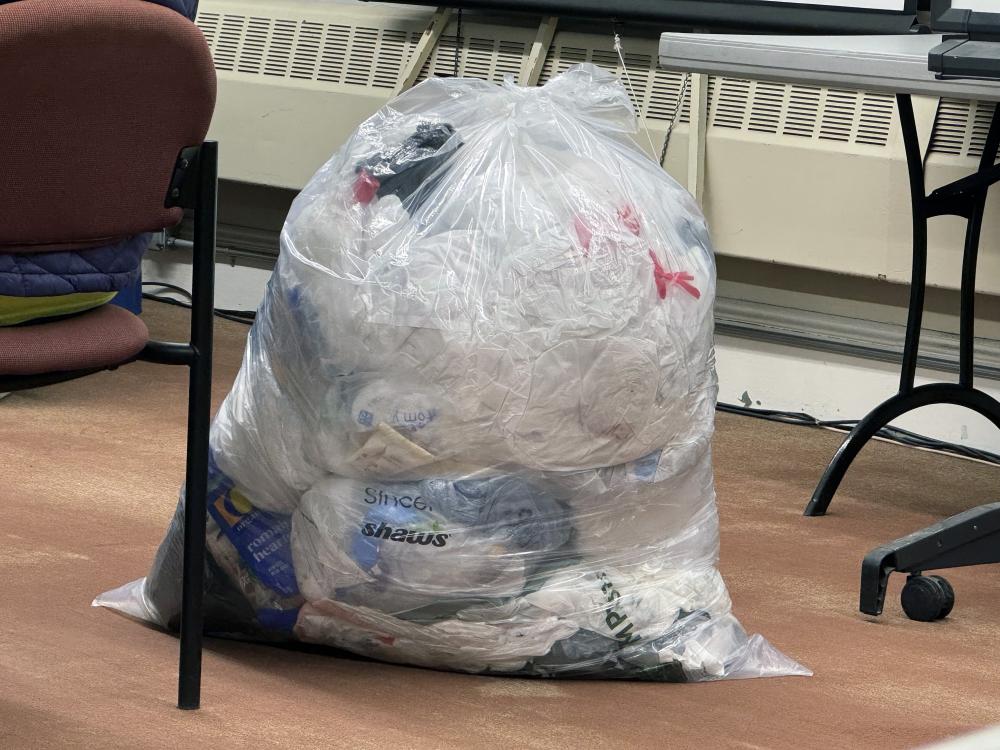 The collected bag of plastics.
Hilary Greene, Jo-Ann Finn and Amanda Cobb with the collected bag of plastics. Photos by Kat Sheridan
The collected bag of plastics.
The collected bag of plastics.
Hilary Greene, Jo-Ann Finn and Amanda Cobb with the collected bag of plastics. Photos by Kat Sheridan
The collected bag of plastics.
After plastic liquor bottles known as ‘nips’ were banned in Wareham, Jo-Ann Finn noticed there were way less littering the streets. She, and the Church of the Good Shepherd Epsicopal Church’s Good and Green group, hope to see this same thing happen with plastic grocery bags.
“I wasn’t sure if it would make a difference but take it from me, it really has,” said Finn, who said she is known as the lady with the dog stroller who walks around picking up trash. “I hardly see any.”
There will be an article at the Annual Spring Town Meeting on Monday, April 27 to ban single-use grocery and take out bags in Wareham.
“People don’t like to pollute or litter, and they want to do the right thing, but we need policies and tools to make it easier to do so,” said Finn.
This ban wouldn’t affect any other type of plastic bag, such as pet waste bags, newspaper bags, trash bags, fruit and vegetable bags or plastic storage bags like Ziploc.
Amanda Cobb, a member of the Recycling Committee and a volunteer at the Recycling Center brought a visual aid to the Tuesday, March 17 Select Board meeting to drive home the point of how much plastic is used in Wareham.
She brought a bag filled with plastic bags that weighed over 10 pounds. She said each week the recycling plant receives about six of these bags during their five hours of operating. This only accounts for what is delivered to the Recycling Center, and not what is thrown out, thrown into recycling bins or end up in nature.
“This has a whole lot of trash bags and other things, but essentially this is all the kinds of plastic that we’re at least attempting to minimize, if not eliminate completely,” said Cobb.
Single use grocery plastic bags can often end up in the trees or ponds, where they endanger the wildlife and add microplastics into the environment. These bags are made from fossil fuels and cause carcinogenic effects.
Hilary Greene, the deacon at the Church of the Good Shepherd Epsicopal Church, pointed out that the town and consumers are paying for the disposal of these plastic bags. By banning them, the cost transfers to a one time fee of buying a reusable bag or using paper bags.
The big question the Select Board had was on reinforcement of the bylaw, if passed. All three members agreed that they were not “reinventing the wheel,” and could ask other towns that established a ban how they did so.
Select Board member Judith Whiteside stated they could alert the big box stores of the new bylaws and allow them to handle it, and take inspiration from other towns for handling small businesses.
Greene stated that some small businesses had concerns about pricing as plastic bags are cheaper than paper, but she recommended that cashiers could ask customers if they want a bag rather than automatically bagging an item.
When New Bedford eliminated plastic bags, they received a grant to make multi-use bags state “reduce, reuse, recycle.” Finn mentioned hoping to do a similar program.
Whiteside agreed with this, suggesting that they could enforce this policy through school outreach, allowing the kids to learn about sustainability and teach their parents.
“[The kids] go home and go, ‘Why are we still using these? These kill whales,’” said Whiteside.
When Select Board member Jared Chadwick joked about always forgetting these bags and using paper bags that rip, Greene suggested rather than bagging items in the store, bring the cart to the car and bag them there.
“It may be a gateway to a larger initiative, but it is a great way to start,” said Finn, “And as they say, ‘There is no such thing as away when you throw something away.’”